
Moving a Hisense Refrigerator in Kenya: Safe Transport, Tilt and Restart Guide

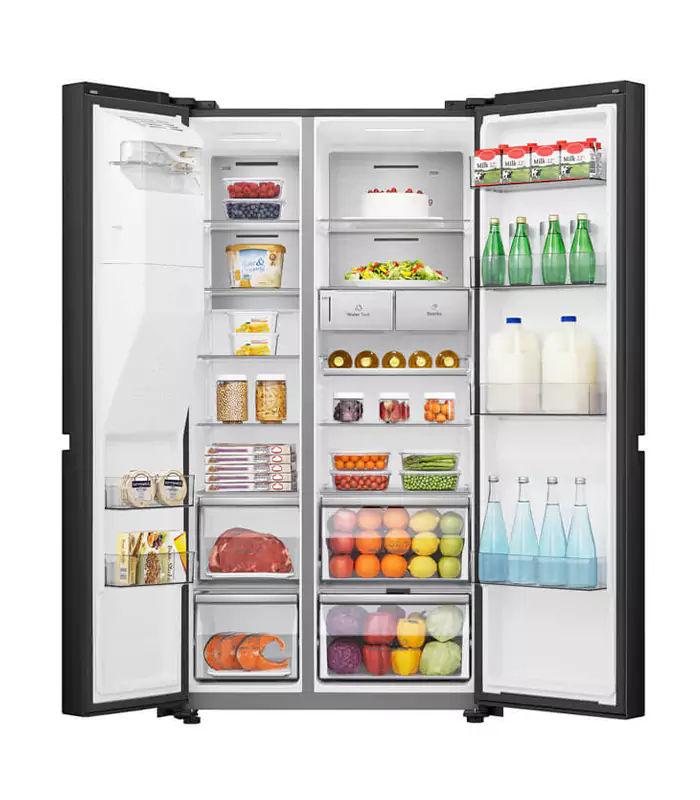
Moving a refrigerator between homes, shops or floors requires more planning than moving ordinary furniture. A large Hisense fridge can be damaged by impact, unsecured shelves, a poorly supported cabinet or careless handling of refrigerant pipework. The correct transport and restart instructions depend on the exact model and the way it was positioned during the move. This guide covers practical preparation for Kenyan deliveries and relocations without inventing a universal settling time.
1. Plan the route before disconnecting the appliance
Measure doorways, corridors, stairwells, lifts, landings and the final installation space. Include the refrigerator’s handles and any protruding fittings when checking clearance. Confirm whether doors or handles may be removed by an authorised installer if access is tight; do not dismantle them without the correct instructions. Our Hisense fridge doorway-clearance guide covers route measurements and delivery planning.
2. Prepare the refrigerator
Remove food and secure it in suitable cool storage. Switch off and disconnect the refrigerator as directed by the manual. If the model requires manual defrosting, allow enough time for ice to melt and water to be collected safely. Empty removable shelves, bins and drawers where possible, dry loose water and pack removable parts separately. Do not chip ice with a knife or sharp tool.
3. Secure doors and loose components carefully
Use a suitable method recommended by the mover or manufacturer to prevent doors from swinging during transport. Protect the finish with soft packing material, but avoid adhesive tape that may damage paint, seals or stainless surfaces. Keep shelves and glass parts padded separately. Do not place heavy objects on top of the refrigerator or use door handles as lifting points.
4. Keep the cabinet upright where possible
Transporting a refrigerator upright is generally the safer planning choice because it avoids unnecessary changes in how internal fluids and components sit. If a tilt is unavoidable, follow the exact model’s handling instructions and ask the delivery team how it should be positioned. Do not assume every refrigerator has the same permitted angle or settling period. Never lay a cabinet flat unless the manufacturer specifically allows that orientation for the model.
5. Protect the base, doors and rear components
Use suitable lifting equipment and enough people for the appliance’s size and weight. Keep the cabinet supported and avoid dragging it across rough floors. Do not push against the condenser, pipes, water connections or rear covers. If the unit has a water dispenser or ice maker, protect the water line and connectors as the manual requires. Have a qualified installer disconnect or reconnect fixed plumbing where needed.
6. Position and restart according to the manual
Once the refrigerator reaches its new location, check that the floor is level and that the required ventilation clearance is available. Allow the cabinet to stand for the period stated in the exact manual, taking account of how it was transported. There is no single restart interval that applies to every model and every transport position. Reconnect the water line only where fitted and inspect for leaks. Restore power using the manufacturer’s procedure.
7. Let the cabinet reach operating conditions before loading
After restart, keep the doors closed as much as practical and allow the appliance to reach its specified operating range before loading perishable food. Use the model’s display and, where appropriate, a suitable thermometer to monitor the temperature. Do not assume that a light turning on means the cabinet is fully cold. For temperature checks, see our Hisense refrigerator temperature guide.
Moving-day checklist
- Measure the complete route and installation space.
- Remove food and secure it in suitable cold storage.
- Defrost only as required by the model manual.
- Remove and protect loose shelves, bins and glass parts.
- Secure doors without damaging the finish or gasket.
- Keep the cabinet upright wherever possible.
- Protect handles, water connections and rear components.
- Follow the exact manual’s settling and restart instructions.
- Check level, ventilation, water connections and temperature after restart.
Frequently asked questions
Can I transport a Hisense fridge lying down?
Do not assume this is permitted. Keep it upright unless the exact model’s instructions explicitly allow another orientation.
How long should I wait before switching it on?
Use the period specified in the exact model manual and account for the actual transport position. There is no universal time for every model.
Can I move a fridge while it contains food?
It is safer to remove food and secure it separately. Loose contents can shift, spill or damage shelves and drawers.
Can I use tape on the refrigerator doors?
Use a non-damaging securing method approved by the mover or manufacturer. Adhesive can mark finishes and damage seals.
Should I remove the doors to fit through a doorway?
Only if the manufacturer provides the correct procedure and a qualified person can complete it. Do not disconnect wiring or water lines yourself.
Can I load food immediately after restarting?
Allow the cabinet to reach the required operating conditions and follow the model manual and food-safety guidance.
What if the refrigerator makes a new noise after moving?
Check that it is level and not touching a wall or cabinet. Stop and seek service if there is severe noise, leakage or a cooling failure.
What if the water dispenser leaks after relocation?
Close the water supply if safe, disconnect power if water is near electrical components and arrange qualified inspection of the connection.
Compare a Hisense refrigerator at Infinite Tech
Infinite Tech lists the Hisense REF628DR 628L side-by-side refrigerator. Confirm the live price, stock, delivery route and warranty before ordering. For installation planning, also read the Hisense refrigerator ventilation guide and visit the Hisense Knowledge Centre.
Handling note: Large refrigerators should be moved by suitable delivery personnel. Follow the exact model’s manual for disconnection, water lines, transport position and restart.
