
How to Clean a Hisense Water Dispenser in Kenya: Safe Tank and Tap Hygiene

A water dispenser is used every day, so the bottle area, taps and drip tray need attention as part of normal kitchen hygiene. Cleaning must be done carefully because a hot-and-cold dispenser contains water reservoirs and electrical heating or cooling components. This guide covers safe owner-level care for Hisense dispensers listed by Infinite Tech. The exact draining, sanitising and flushing procedure must follow the manual supplied with the specific model.
1. Identify the exact dispenser before cleaning
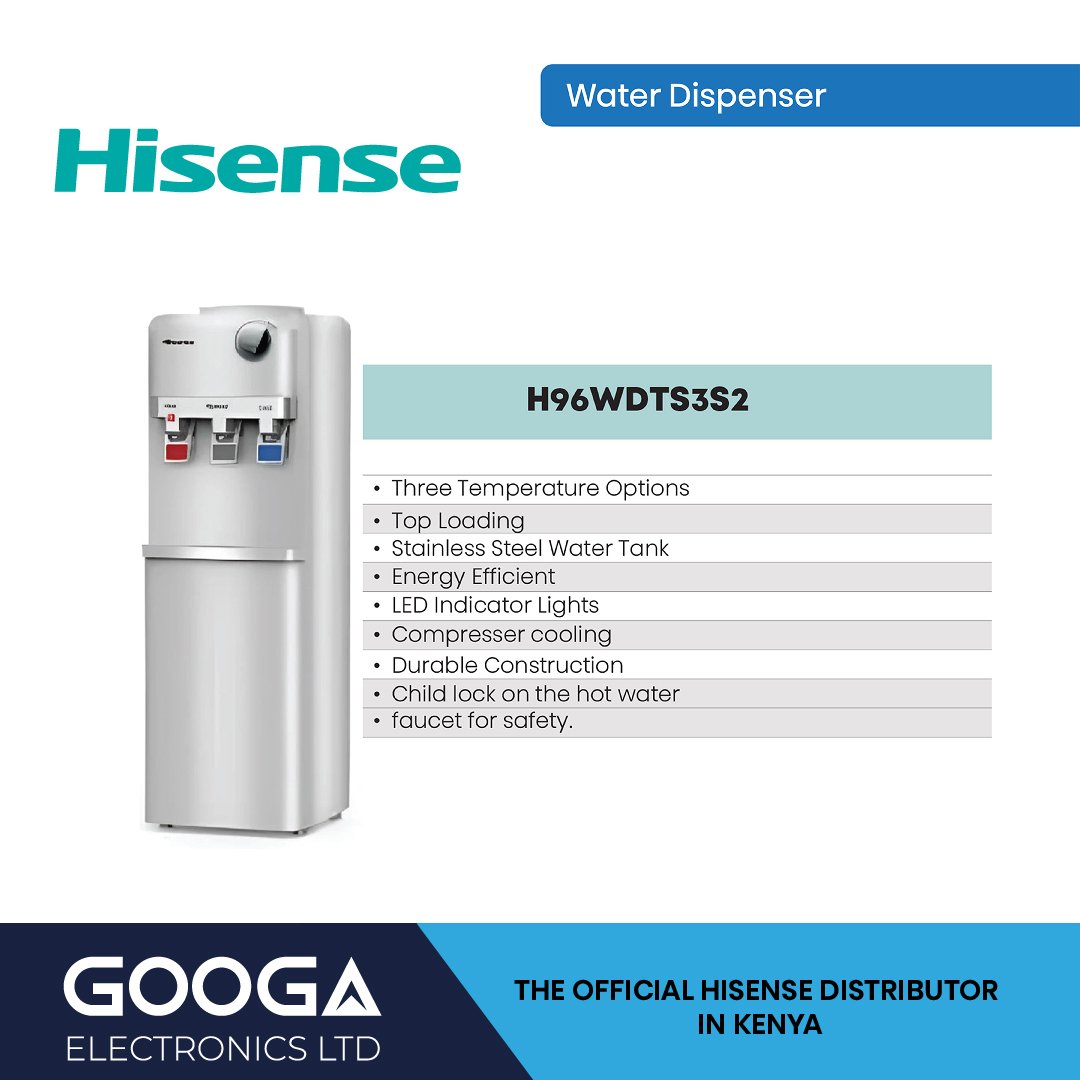
Infinite Tech lists several hot, normal and cold Hisense dispenser variants, including the H97WDTB3S1, H96WDTB3S1 and H96WDTS3S2. Match the model code on the rating label and read its instructions before removing a bottle connector, draining a reservoir or opening any cover. Similar-looking dispensers can have different bottle-loading and drainage arrangements.
2. Make the dispenser safe
Switch the appliance off and unplug it before cleaning. Hot water can remain in the internal tank and taps after the heater is switched off, so allow the unit to cool. Keep children away from the hot-water tap. If the manual requires a particular draining order, use it. Do not tilt the dispenser sharply or remove screwed covers to reach internal parts.
3. Clean the bottle area and drip tray
Remove the empty bottle only as the model instructions describe. Wipe the bottle support and accessible exterior surfaces with a clean, soft cloth. If the drip tray is removable, lift it out according to the manual, wash it with mild dishwashing liquid and clean water, rinse it and dry it before refitting. Empty the tray before it overflows; stagnant water can leave residue and odour.
Do not push cloths, brushes or tools down the bottle probe or into a water inlet. Avoid touching water-contact openings with unwashed hands. Use a clean replacement bottle and keep its cap or seal protected until installation.
4. Clean taps and external surfaces
Wipe the tap handles, tap outlets and front panel with a soft damp cloth. Use a mild cleaner on exterior surfaces only where the manual permits it, then remove any cleaner residue. Do not spray liquid directly into buttons, vents, seams or electrical openings. Never immerse the dispenser body in water.
5. Treat internal sanitising as a model-specific procedure
The water reservoir and internal lines are food-contact surfaces. Do not pour bleach, disinfectant, vinegar, descaler or scented cleaning products into the tank unless the exact Hisense manual explicitly specifies the product, dilution, contact time and flushing procedure. Never mix cleaning chemicals. An incorrect chemical or concentration can damage seals, leave an unsafe taste or contaminate drinking water.
If the manual provides a sanitising procedure, follow it exactly and flush the system as directed before dispensing water for drinking. If the procedure is missing or unclear, ask the retailer or an authorised service provider rather than improvising a chemical treatment.
6. Refill and restart carefully
Install a clean, compatible bottle and check the dispenser is stable. Follow the manual’s priming or filling instructions. Some hot-water systems must be filled before the heating function is switched on; do not energise a heater when the manual says the reservoir must be full. Check for leaks around the bottle connection, taps and accessible drain points. If water appears near the electrical cord or socket, unplug only if it is safe to do so and arrange service.
7. Keep a simple hygiene routine
- Wipe tap handles and the drip tray when visibly dirty and empty standing water promptly.
- Keep bottle caps and the bottle neck clean during replacement.
- Use sealed drinking-water bottles from a reliable supplier and avoid touching the water outlet.
- Follow the model manual for internal cleaning and sanitising intervals.
- Stop using the unit if water develops an unexplained persistent odour, visible contamination or a leak.
Hisense water dispensers at Infinite Tech
Compare the Hisense H97WDTB3S1 black dispenser, H96WDTB3S1 black dispenser and H96WDTS3S2 silver dispenser. Confirm the exact hot, normal and cold configuration, current stock and warranty information on the live product listing before ordering. For model selection, read the Hisense water dispenser prices and buying guide and the model comparison guide.
Frequently asked questions
How often should I clean a Hisense water dispenser?
Clean visible exterior areas and the drip tray as needed, and follow the exact manual for internal sanitising intervals. Bottle hygiene and regular inspection are important between full cleaning cycles.
Can I pour bleach into the water tank?
Only if the exact model manual expressly gives an approved sanitising method, dilution and flushing procedure. Do not improvise or mix bleach with other cleaners.
Can I clean the dispenser while it is plugged in?
Unplug it before cleaning. Allow hot water and internal components to cool and keep liquid away from electrical openings.
Can I use vinegar to remove scale?
Do not assume vinegar is suitable. Use only a cleaning or descaling method specified by the manufacturer for the exact model.
Why is water collecting in the drip tray?
Small drips can occur during normal use, but a tray that fills unusually quickly may indicate a bottle, tap or drain issue. Inspect only accessible areas described in the manual and arrange service for persistent leakage.
When can I switch the hot-water function back on?
Follow the manual’s refill and priming instructions. If the reservoir must be full before heating, confirm water is flowing from the hot tap before energising the heater.
What if the water has an unusual taste after cleaning?
Stop drinking it, review the approved sanitising and flushing procedure, and contact service if the taste persists. Do not add extra chemicals to try to mask the taste.
Where can I buy a Hisense water dispenser in Nairobi?
Use the product links above to check current model availability at Infinite Tech and confirm warranty and delivery details before ordering.
Important: This is general owner-care guidance. The supplied Hisense manual for the exact model always takes priority, especially for internal tank cleaning, drainage and chemical sanitising.

One thought on “How to Clean a Hisense Water Dispenser in Kenya: Safe Tank and Tap Hygiene”
Comments are closed.