
Hisense Chest Freezer Electricity Consumption in Kenya: Measure kWh and Running Cost

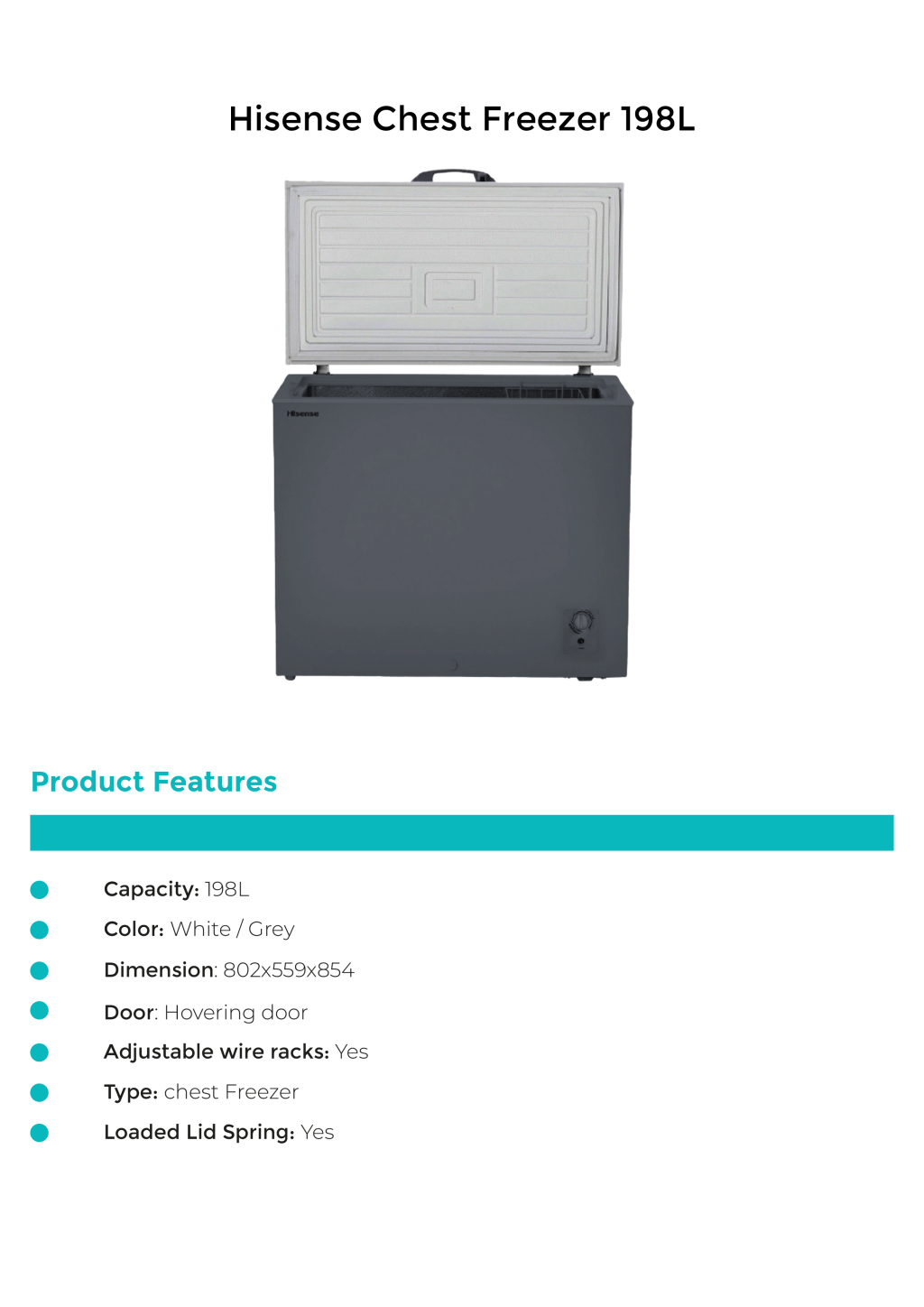
A chest freezer’s electricity cost matters at home and in a shop, but the rated wattage on a label is not the same as the energy it uses every day. A compressor cycles on and off, and actual consumption changes with room temperature, lid openings, loading, thermostat setting, ventilation and the condition of the lid seal. This guide shows how to measure a Hisense chest freezer’s real kWh use and calculate a practical monthly estimate in Kenya without inventing a model-specific consumption figure.
1. Start with the exact model and rating label
Infinite Tech lists models including the FC245HS 245L, FC297SH 297L glass-slider, FC40DD 301L glass-door and FC702SH 702L. Before comparing running costs, record the complete model code and read the electrical rating label on the actual unit. Do not transfer a wattage, annual kWh figure or energy class from another capacity or regional variant.
2. Understand watts versus kilowatt-hours
Watts (W) describe electrical power at a moment; kilowatt-hours (kWh) measure energy used over time. A compressor does not necessarily draw its rated input continuously for 24 hours. Multiplying the nameplate wattage by 24 hours can therefore produce a misleading daily estimate. Use the label to check electrical compatibility and use an appropriate energy meter to measure actual energy over a representative period.
3. Measure actual consumption safely
A plug-in energy meter must be rated for the freezer’s voltage, current and compressor starting characteristics. Use only a properly earthed, correctly rated meter and socket. If the plug, socket or wiring is loose, hot, damaged or unsuitable, do not insert a meter; ask a qualified electrician. Avoid improvised extension leads and do not open the freezer’s electrical compartment.
Record the meter’s cumulative kWh reading at the start and end of a measurement period. A week is usually more informative than a short test because it includes normal compressor cycling and household or shop routines. Keep the freezer in its normal location, use it normally and note unusual events such as a power interruption, large new load of unfrozen stock or a long period with the lid open.
4. Calculate the daily and monthly cost
Use the measured energy, not an assumed duty cycle:
- Average daily use: total measured kWh divided by the number of measurement days.
- Estimated 30-day use: average daily kWh multiplied by 30.
- Estimated energy cost: estimated monthly kWh multiplied by the applicable per-unit cost from your latest electricity bill.
Your electricity bill may include fuel, forex, levies, taxes and other charges in addition to the energy charge. For a realistic household or business estimate, use the effective per-unit cost from the bill or calculate the marginal cost for additional consumption with the help of your tariff details. Do not assume one fixed Kenya-wide tariff applies to every customer and billing period.
5. Compare freezers under similar conditions
When comparing a 245L, 297L, 301L or 702L freezer, use the same measurement period and similar conditions. A large freezer serving a busy shop may have frequent lid openings and heavy loading; a smaller home freezer may be opened less often. Comparing one unit during a hot week and another during a cool week will not produce a fair result.
Also compare the useful storage volume, lid layout, access, intended stock and service support. A glass slider may suit retail display access, while a solid lid may suit bulk storage. The right purchase is not automatically the unit with the lowest one-week meter reading if its capacity or use case is different.
6. Reduce avoidable energy waste
- Place the freezer in a ventilated location away from direct sun and unnecessary heat.
- Follow the model manual’s clearance requirements and keep ventilation openings unobstructed.
- Close the lid promptly and avoid repeated unnecessary opening.
- Check that the lid closes evenly and that the gasket is clean and undamaged.
- Use the temperature setting recommended by the manufacturer for the stored food.
- Defrost only as the manual directs; do not chip ice with knives or sharp tools.
- Allow hot products to cool safely before loading, and do not overload beyond the model’s guidance.
For safe ice removal, see the Hisense chest-freezer defrosting guide. Businesses can also use the commercial freezer stock-rotation guide to improve product access and reduce unnecessary lid-open time.
Hisense chest freezers to compare
- Hisense FC245HS 245L chest freezer
- Hisense FC297SH 297L glass-slider chest freezer
- Hisense FC40DD 301L glass-door chest freezer
- Hisense FC702SH 702L chest freezer
For capacity and business use, read the Hisense chest-freezer buying guide and Hisense freezers for shops and butcheries. Check the live product pages for current price and stock; no electricity-consumption figure is claimed here for any model without a verified rating or measurement.
Frequently asked questions
Does a 702L freezer always use more electricity than a 245L model?
Capacity alone does not establish actual kWh use. Design, insulation, ambient temperature, loading and usage patterns all matter. Measure the exact unit under normal conditions.
Can I estimate daily use by multiplying watts by 24?
That assumes the freezer draws the same power continuously. Compressor cycling makes that a poor estimate for many freezers. Use a suitable energy meter for actual consumption.
How long should I measure a freezer?
A representative multi-day period, such as seven days, is more useful than a brief test. Include normal shop or household use and note unusual events.
Will opening the lid increase electricity use?
Frequent or prolonged openings allow warm air into the cabinet and can increase the cooling load. Organised stock placement helps reduce unnecessary opening time.
Can I use any plug-in energy meter?
No. It must be rated for the freezer’s voltage, current and compressor starting characteristics. Ask an electrician if the meter or socket suitability is uncertain.
What electricity tariff should I use in the calculation?
Use the applicable per-unit cost from your current bill. Bills can include several charges beyond the energy unit rate, so a single generic figure may not match your actual cost.
Does a glass-lid freezer necessarily cost more to run?
Do not assume that from the lid type alone. Compare verified model data or measure each freezer under similar conditions and use patterns.
Where can I buy a Hisense chest freezer in Kenya?
Compare the FC245HS, FC297SH, FC40DD and FC702SH listings above at Infinite Tech and confirm the exact model, stock and warranty before ordering.
Important: This article provides a measurement method, not an unverified energy rating. Follow the freezer’s manual and use a suitably rated meter and safe electrical installation.
