
Hisense Dishwasher Not Drying Dishes in Kenya: Safe Checks

If dishes come out of a Hisense dishwasher clean but still wet, the cause may be the selected programme, how items are loaded, rinse-aid settings, the type of dishes or a fault that needs service. Drying performance differs between models and programmes. Start with the user manual for your exact dishwasher; do not assume every Hisense model uses the same drying method or has the same options.
1. Check the programme you selected
Short, eco or quick programmes may prioritise water and energy savings and can leave some items wetter than a programme with a dedicated drying phase. Review the cycle description in the manual and choose a suitable programme for the load. Do not assume that a longer cycle automatically means better drying for every material. If the dishwasher has an extra-dry or high-temperature option, use it only when the manual says it is appropriate for the dishes and model.
2. Load items so water can drain away
Place cups, bowls and containers at an angle so water does not pool on their bases. Avoid nesting bowls or stacking plates so closely that water cannot reach the surfaces. Check that tall items are not blocking a spray arm or preventing the detergent dispenser from opening. Lightweight plastic items can retain droplets more readily than glass or ceramic, and some plastics are not suitable for dishwasher drying temperatures. Follow the care marking on each item and the loading diagram in your dishwasher manual.
3. Check rinse aid and detergent guidance
Rinse aid helps water run off compatible dishware and can improve drying results on models that use it. Check the dispenser level and the setting recommended in the manual. Do not overfill it or pour ordinary washing-up liquid into the rinse-aid compartment. Use detergent intended for automatic dishwashers and follow the pack directions. Too much detergent, unsuitable detergent or hard-water deposits can leave residue that looks like poor drying. Our Hisense dishwasher detergent and water-hardness guide explains the related checks.
4. Allow safe unloading and cooling time
When a cycle finishes, hot dishes may still have droplets on them. If the manual recommends a short standing period or a particular door-opening procedure, follow it. Open the door carefully because hot steam may escape. Do not force the door or leave it open where children can reach hot dishes, detergent residue or sharp utensils. Remove items in the order recommended by the manual so water trapped on upper racks does not spill onto lower dishes.
5. Check the filter and spray arms
Food debris on a user-accessible filter or blocked spray-arm holes can reduce wash performance and leave detergent or water on dishes. Switch the dishwasher off and clean only the parts identified as user-removable in the manual. Rinse the filter as instructed and check that spray arms can rotate freely after the racks are correctly positioned. Do not remove panels, dismantle the pump or use sharp metal objects to clear jets. See our filter and spray-arm cleaning guide and dishwasher loading guide.
6. When drying needs a technician
If the dishwasher remains cold throughout a programme that should heat water, shows a recurring error, trips power, leaks or produces a burning smell, stop using it and arrange qualified service. Do not test heating elements, wiring or door interlocks yourself. Keep the model and serial number ready when requesting assistance. Hisense’s official support FAQs and help guides direct owners to model-specific manuals; support procedures and contacts differ by market.
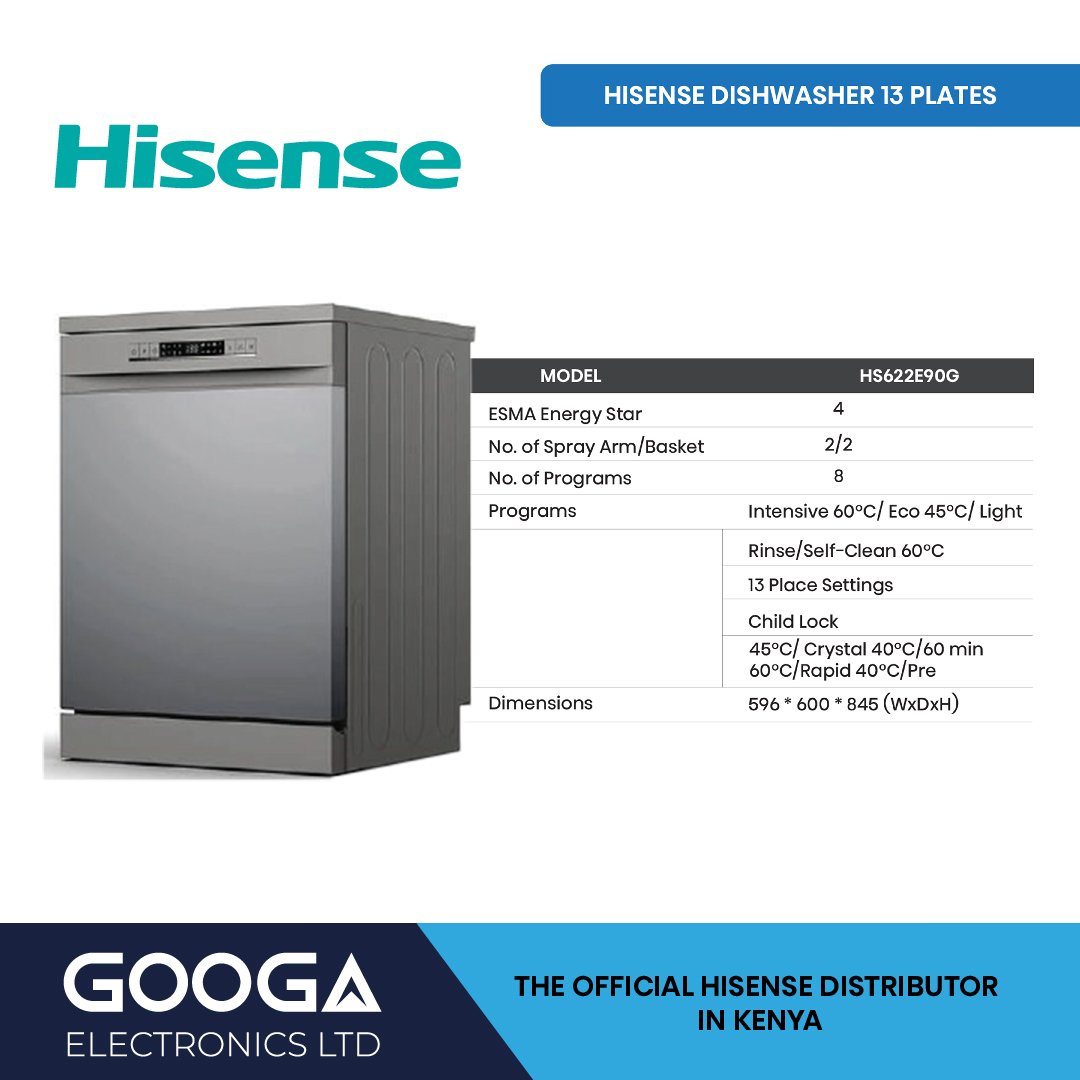
For a product reference, see the Hisense HS622E90G 13-place dishwasher. Confirm the exact model, current availability and local warranty before ordering.
Frequently asked questions
Why are plastic containers still wet after a dishwasher cycle?
Some plastics retain water more readily than glass or ceramic. Check that each item is dishwasher-safe, load it at an angle and use the drying option permitted by the manual.
Does rinse aid help a Hisense dishwasher dry better?
It can help water drain from compatible dishware on models designed to use it. Check the dispenser and setting instructions for your exact dishwasher.
Can I open the dishwasher immediately after it finishes?
Follow the manual’s unloading guidance and open carefully because hot steam may escape. Keep children away from hot dishes and detergent residue.
Will a quick programme dry every dish?
Not necessarily. Cycle duration and drying performance differ. Compare programme descriptions in the model manual before changing settings.
Can a dirty filter affect drying?
A clogged filter or spray arm can reduce cleaning and rinsing performance, leaving residue or water behind. Clean only user-accessible parts as instructed.
When should I stop using the dishwasher?
Stop if it trips power, leaks, smells burnt, shows repeated errors or fails to heat as expected. Arrange qualified service rather than opening the cabinet.
Related Hisense guides
Explore the Hisense Knowledge Centre for dishwasher installation, loading, cleaning and appliance buying advice.
