
Hisense TV Electricity Consumption in Kenya: How to Measure Actual Running Cost

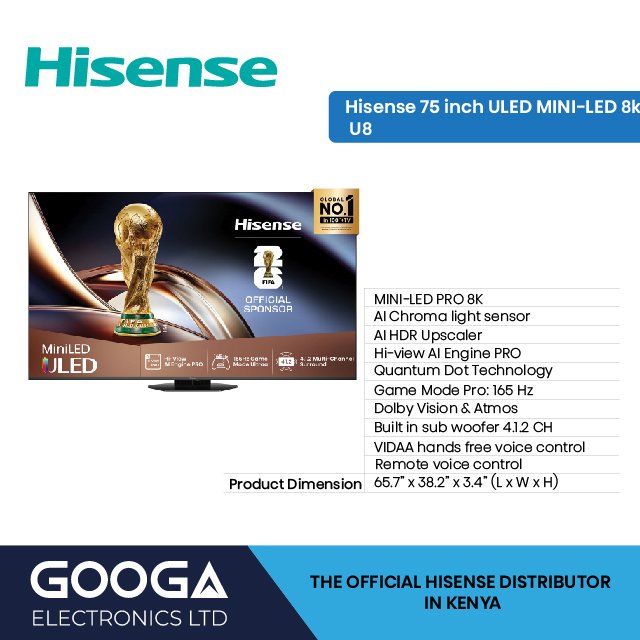
A television’s screen size and advertised technology do not establish its actual electricity consumption. Compare models such as the 43A6QKEN and 75U8Q using the exact regional power information rather than assuming a fixed wattage for every screen size.
Rated input versus average power
The rating plate may specify maximum input or another defined rating. Actual consumption depends on picture brightness, content, operating mode and connected features. Where safe and appropriate, use a properly rated plug-in energy meter according to its instructions or request measurements from a qualified professional.
Worked example
| Illustrative average power | Viewing time | 30-day energy |
|---|---|---|
| 60W | 5 hours/day | 9 kWh |
| 120W | 5 hours/day | 18 kWh |
| 200W | 5 hours/day | 30 kWh |
Multiply kWh by your applicable electricity charge. At an illustrative KSh 30/kWh, these totals would be KSh 270, 540 and 900. They are examples only, not actual Hisense measurements or Kenya Power tariffs.
Account for standby and accessories
Measure standby separately if it matters to your budget. Add a decoder, soundbar or media player as separate loads. Use a comfortable picture mode and approved energy-saving settings where suitable.
Compare before purchasing
Request model documentation and compare similar usage conditions. The energy label guide explains how to interpret documented consumption for regulated appliance categories.
Read more in the Hisense Knowledge Centre. Confirm the exact regional model, physical stock, live selling price and local warranty before ordering. This is an independent retail guide, not a claim of hands-on testing.
