
Hisense Chest Freezer Excessive Frost Build-Up in Kenya: Causes and Prevention

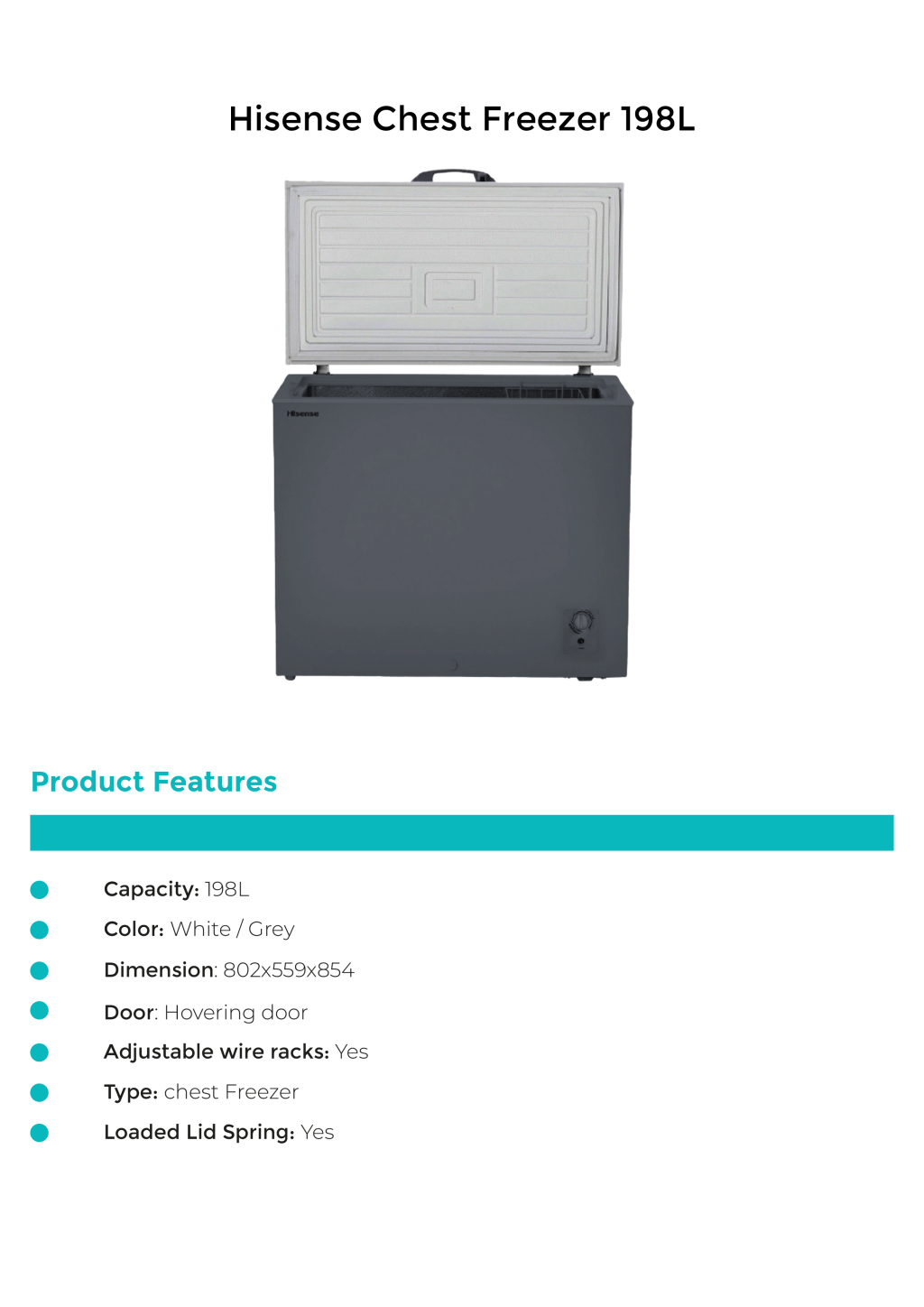
A thin frost layer can develop in a chest freezer during normal use, but thick or rapidly returning frost can reduce usable storage space and make the lid harder to close. Frequent lid opening, warm food, humid air entering the cabinet, a damaged gasket or a lid that does not close evenly may contribute. Exact defrost instructions vary by model.
Why frost builds up
- Frequent opening: Each opening allows warmer, moisture-laden air to enter.
- Wet or warm food: Uncovered or insufficiently cooled items add moisture to the cabinet.
- Poor lid sealing: Dirt, a damaged gasket or an obstruction can allow humid air to enter.
- Overpacking: Items may prevent the lid from closing fully or obstruct the designed storage arrangement.
- Defrost interval: Some models require periodic manual defrosting according to the user manual.
Check the lid and gasket
Remove packages that stop the lid from closing. Clean visible dirt from the gasket using a soft cloth and a mild method suitable for the appliance. Inspect for tears, distortion or sections that do not contact the cabinet. Do not stretch, cut or glue the gasket yourself.
Improve loading and opening habits
Allow hot food to cool safely before placing it in the freezer, and use suitable sealed packaging to reduce moisture transfer. Organise frequently used items so the lid is not left open while searching. Avoid forcing the lid shut over overfilled baskets or packages.
Defrost safely when the manual requires it
Follow the exact model’s defrost procedure. Remove food and keep it safely frozen in another suitable freezer or insulated container. Switch off and unplug the appliance as instructed. Allow frost to soften naturally and use towels to collect water. Never chip ice with a knife, screwdriver or metal tool, pour boiling water onto internal surfaces, or use a heat gun. These actions can damage the liner or refrigerant system.
When to arrange service
Seek qualified service if frost returns unusually quickly after correct defrosting and sealing checks, the lid gasket is damaged, the freezer does not hold temperature or the compressor runs abnormally. Do not remove panels or handle refrigerant components.
Hisense chest freezers at Infinite Tech
The Hisense FC40DD 301L glass-door chest freezer is one current catalogue listing. Compare lid design, usable capacity, basket layout and available space. Check the live product page for current price, stock and written warranty. Explore more guides in the Hisense Knowledge Centre.
Frequently asked questions
Is a little frost normal in a chest freezer?
Some frost can occur during normal use. Thick, fast-growing frost deserves a check of sealing and opening habits.
Can a damaged lid gasket cause frost?
Yes. A poor seal can allow humid air into the cabinet.
Can I scrape frost with a knife?
No. Sharp tools can puncture the liner or damage the refrigeration system.
Should I put warm food directly into the freezer?
Allow food to cool safely first and package it appropriately, following food-safety guidance.
How often should I defrost?
Follow the model manual; there is no single interval for every chest freezer.
What if frost returns immediately after defrosting?
Check the lid seal and closing, then request service if the problem persists.
