
Hisense Dishwasher Not Draining or Leaking in Kenya: Safe Owner Checks

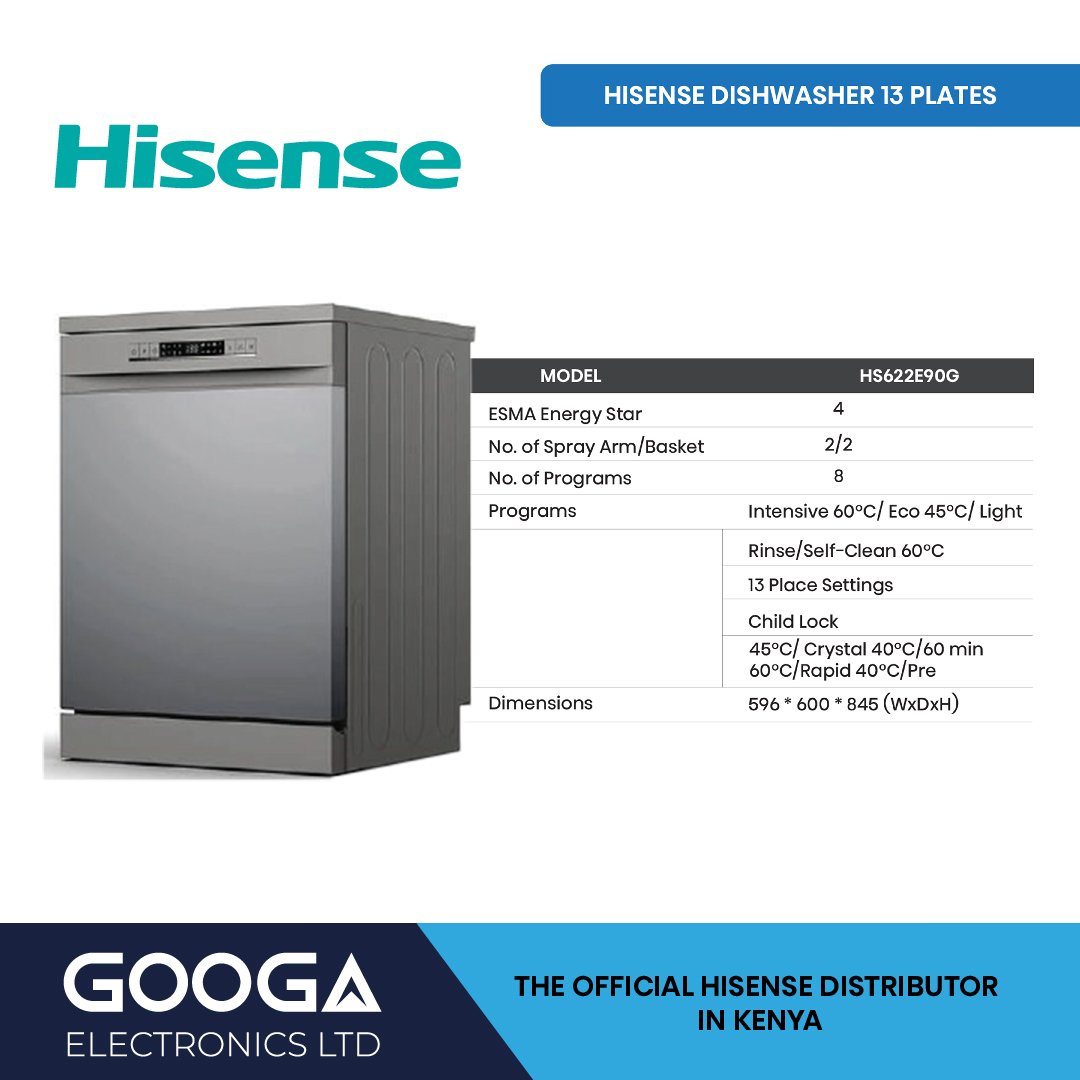
A dishwasher that leaves water at the bottom or leaks onto the kitchen floor should not simply be run through another cycle repeatedly. Some causes are visible and safe to check, such as food debris in the filter or a kinked accessible drain hose. Others involve the pump, seals, electrical parts or internal plumbing and require service. This guide explains safe owner-level checks for Hisense dishwashers, including the HS622E90G and HS623E90X listed by Infinite Tech.
1. Stop the cycle and make the area safe
If water is spreading across the floor, stop the programme. Keep people away from wet electrical connections. If water has reached a socket, plug or cable, do not touch it; isolate power only if it is safe and arrange qualified help. Turn off the water supply if the accessible tap can be reached safely. Do not pull a built-in dishwasher out by its door or start removing panels.
2. Check for an overloaded or obstructed load
Open the door only when it is safe and the water has cooled. Look for a large plate, utensil or pan blocking the spray arm or preventing the door from closing correctly. Check that racks are seated properly and that tall items do not obstruct the detergent dispenser. An incorrectly loaded rack can affect wash performance, although it will not explain every drainage fault.
3. Inspect the filter using the manual’s method
Once the appliance is off and cool, remove the lower rack if the manual permits it. Inspect the accessible filter for food scraps, labels or debris. Follow the exact model’s instructions for unlocking and removing the filter; do not force a component that will not turn. Rinse removable parts with warm water and a soft brush, then refit them securely. For a full routine, see the Hisense dishwasher filter and spray-arm maintenance guide.
4. Look at the accessible drain hose and sink connection
If the drain hose is visible without moving the appliance, check for a sharp kink, crushing or obvious damage. Check the sink waste connection for a visible blockage only if it is accessible and safe. Do not disconnect a hose while water is present or reach behind a built-in unit without the correct isolation and installation instructions. If the hose is damaged, leaking or inaccessible, arrange an installer or service technician.
5. Check for excessive foam or detergent misuse
Hand-washing liquid and unsuitable detergents can create excessive foam in an automatic dishwasher. Too much foam can contribute to poor draining or leakage around the door. Use detergent intended for dishwashers and follow the dosing instructions. For water hardness, salt and rinse aid, read the Hisense dishwasher detergent and water-hardness guide.
6. Inspect the door area for visible obstructions
Check whether food, packaging or a utensil is caught around the door seal. Wipe accessible seal surfaces gently with a soft cloth. Do not stretch, pull or remove the gasket. A torn seal, damaged hinge or leak from underneath the appliance requires service.
7. Know when the pump or internal system needs a technician
If water remains after the accessible filter and hose checks, the issue may involve a drain pump, internal hose, sensor or control component. Do not insert tools into the pump opening or pour chemical drain cleaner into the dishwasher. Repeated breaker trips, burning smells, grinding noises, water from underneath or a recurring leak are reasons to stop using the unit and arrange qualified service.
Hisense dishwasher models at Infinite Tech
- Hisense HS622E90G 13-place dishwasher — check the exact model manual for filter access and drain-hose routing.
- Hisense HS623E90X 15-place dishwasher — confirm the model suffix and installation arrangement.
For a new appliance, start with the Hisense dishwasher installation checklist. For rack loading and spray-arm clearance, read the dishwasher loading guide.
Frequently asked questions
Why is water still at the bottom of my Hisense dishwasher?
A blocked filter or drain path can be one cause, but a pump or internal fault is also possible. Check only the accessible parts described in the manual.
Can I pour drain cleaner into the dishwasher?
No. Household drain chemicals can damage appliance components and create unsafe residues. Use the model’s maintenance instructions and arrange service if the drain remains blocked.
Can too much detergent cause a leak?
Excessive foam from unsuitable detergent or over-dosing can contribute to leakage or poor wash performance. Use automatic-dishwasher detergent at the recommended dose.
Should I remove the dishwasher drain hose to clear a blockage?
Not as a routine owner check. A hose may contain water and may be connected to electrical or plumbing components. Have an installer or technician handle inaccessible connections.
What if water leaks from underneath the dishwasher?
Stop the cycle, isolate water and power if safe, and arrange service. Do not continue operating a unit with a persistent internal leak.
Can I clean the pump with a screwdriver?
No. Do not insert tools or dismantle the pump. Follow the manual’s accessible filter procedure only.
Can I run another cycle to see if the leak clears?
Do not repeatedly run a leaking or non-draining appliance. Find the visible cause only if safe; otherwise stop and arrange service.
Where can I buy a Hisense dishwasher in Kenya?
Compare the HS622E90G and HS623E90X listings above at Infinite Tech and confirm current stock, exact model, warranty and installation terms.
Important: This article is not a pump-repair or plumbing manual. Stop using the appliance if it leaks persistently, trips power or exposes wet electrical parts.
