
Hisense Dishwasher Leaving White Residue or Cloudy Glasses in Kenya: Causes and Fixes

White film on glasses, powder left on dishes or cloudy glassware after a wash can have several causes. The dishwasher may be using unsuitable detergent, receiving water with high mineral content, running an unsuitable programme or carrying residue in its filter and spray system. Cloudy glass can also be permanent etching rather than removable detergent or mineral deposits.
Hisense dishwasher controls and water-softener arrangements vary by model and market. Use the manual for the exact model before changing salt, rinse-aid or water-hardness settings.
Identify the residue before changing settings
- White powder that wipes off: May be detergent residue or mineral deposits.
- Water spots: Often associated with drying, rinse-aid settings or water hardness.
- Cloudy glass that does not wipe clear: May be glass etching or permanent surface damage.
- Food particles on dishes: Check loading, spray-arm movement, filter cleanliness and programme selection.
Test one affected glass with a gentle hand-cleaning method suitable for glass. If the cloudiness remains, do not assume that changing dishwasher detergent will restore it.
Practical checks for better wash results
1. Use automatic-dishwasher detergent
Use detergent designed for automatic dishwashers and dose it according to the product instructions and load. Hand-washing liquid creates excessive foam and should not be used in a dishwasher. Too much detergent can leave deposits, while too little may not clean a heavily soiled load.
2. Check rinse aid
Rinse aid helps water drain from dish surfaces and can reduce spotting. If the model has a rinse-aid dispenser, check its level and adjust the setting only as the manual recommends. Do not pour ordinary dishwashing liquid into the rinse-aid compartment.
3. Confirm water-hardness and salt settings
Some dishwasher models have a water softener and a dedicated dishwasher-salt reservoir. If the model supports these features, set them according to the local water-hardness guidance and manual. Never put table salt into the salt reservoir. If the model does not have a salt system, do not assume one can be added.
4. Load dishes so spray can reach them
Do not nest bowls or stack plates tightly. Keep tall utensils from blocking spray arms, and make sure the arms can rotate freely before starting a cycle. Place items in the rack positions shown in the manual and avoid overloading.
5. Inspect the filter and spray arms
Remove and clean the user-serviceable filter only as instructed. Rinse away food debris and reinstall it correctly. Check visible spray-arm holes for obvious blockage; do not use sharp tools that can enlarge or damage the openings.
6. Select a suitable programme
Eco, quick and intensive programmes can use different temperatures, water volumes and durations. Match the cycle to the soil level and cookware. Very short cycles may not be ideal for dried-on food or a heavily loaded rack.
7. Maintain the machine
Clean the filter regularly, wipe the door edges and follow the manufacturer’s machine-cleaning instructions. If the appliance has a maintenance or self-cleaning programme, use only the method and products specified for that model.
When to arrange service
Request service if dishes remain dirty after correct loading and cleaning, spray arms do not rotate, water does not drain, the machine displays a persistent error, or the dispenser does not operate. Stop using the machine if water leaks near electrical components or there is a burning smell. Do not remove electrical covers or dismantle the circulation pump.
Hisense dishwasher at Infinite Tech
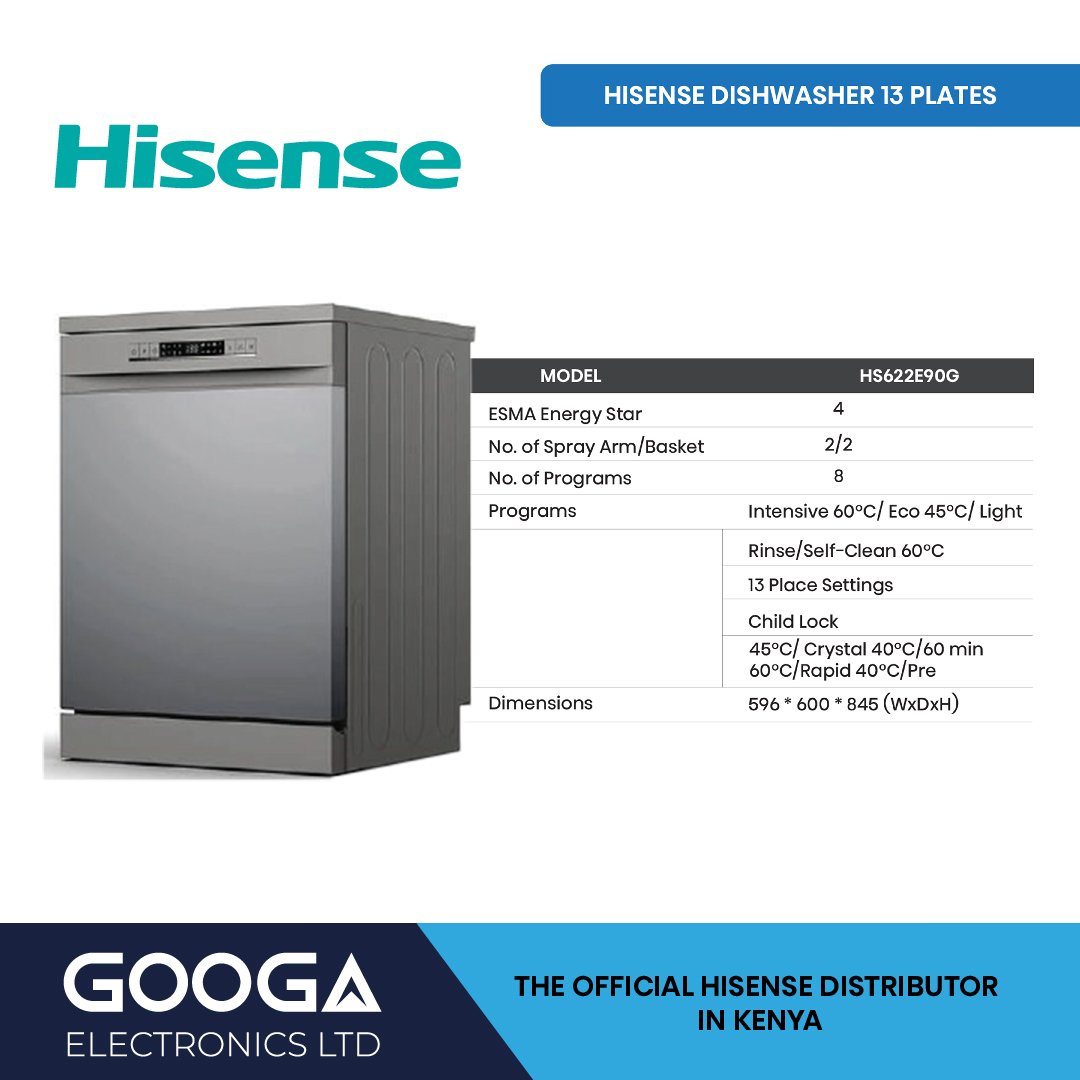
The Hisense HS622E90G 13-place dishwasher is one current catalogue listing. Confirm the exact local model, rack layout, installation requirements, current price, stock and warranty on the live product page before ordering.
Read more in the Hisense Knowledge Centre and browse home appliances at Infinite Tech.
Frequently asked questions
Why are my glasses cloudy after washing?
Cloudiness may come from mineral deposits, detergent residue or permanent etching. Check whether the film wipes off before changing settings.
Can I use ordinary dishwashing liquid?
No. Use detergent formulated for automatic dishwashers.
Does rinse aid remove white residue?
It can improve drying and reduce water spots, but it will not fix every cause of residue or restore etched glass.
Should I add dishwasher salt?
Only if the exact model has a salt reservoir and its manual instructs you to use dishwasher salt and set water hardness.
How often should I clean the filter?
Follow the model manual and inspect it regularly, especially after washing heavily soiled dishes.
Why are dishes still dirty when the dishwasher runs?
Overloading, blocked spray arms, a dirty filter, unsuitable detergent or an unsuitable programme can affect results.
