
Hisense Air Conditioner Leaking Water Indoors in Kenya: Safe Checks

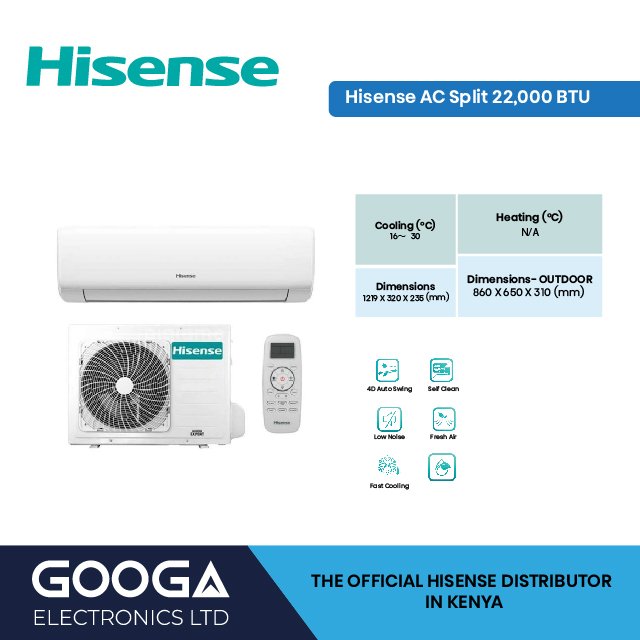
Water dripping from an indoor air-conditioner unit should not be ignored. In cooling mode, moisture from room air can condense on the indoor coil and should normally leave through a properly installed drain. A blocked, disconnected, damaged or poorly sloped drain can allow water to escape into the room.
Hisense air-conditioner designs and drainage arrangements differ by model and installation type. This guide covers external observations only. Do not open the casing, touch electrical terminals or attempt refrigerant work.
What to do first if water is dripping
- Switch the air conditioner off using its normal control. If water is close to a socket, wiring or another electrical device, isolate the circuit only if it is safe to do so.
- Protect nearby furniture and flooring. Keep people away from wet electrical equipment.
- Take a photo of where the water appears and note whether the unit was cooling, recently switched off or operating in a humid room.
- Do not keep running the unit to see whether the leak clears.
Common causes of indoor water leakage
Blocked condensate drainage
Dust, slime or debris can obstruct a condensate drain. Water then backs up instead of leaving through the intended outlet. A technician can inspect and clear the drain using the correct method for the installation.
Dirty air filter or restricted airflow
A heavily loaded filter can restrict airflow. Depending on operating conditions, this can contribute to coil icing and later water overflow as ice melts. Check only user-removable filters described in the manual, and clean and dry them as instructed before reinstalling.
Drain hose or pipe installation problem
A drain line that is kinked, crushed, disconnected or incorrectly routed may not carry water away. Do not pull a concealed pipe out of a wall or ceiling. Ask the installer to inspect its slope, joints and outlet.
Installation level or damaged drain tray
An indoor unit or drain tray that is not positioned correctly may allow condensate to spill. A cracked tray, loose connection or damaged insulation requires a service inspection.
Ice on the indoor coil
Ice may melt and produce excess water after the unit is switched off. Restricted airflow, operating conditions or a refrigeration fault may be involved. Do not chip ice from the coil or attempt to add refrigerant.
Safe checks before booking service
- Check whether the filter is visibly dirty and clean it only if the manual identifies it as user-serviceable.
- Look for a visible drain outlet outside the building, but do not insert wire, chemicals or tools into the pipe.
- Note whether water appears from the front panel, side, pipe connection or ceiling around a concealed installation.
- Record the model number and any error code displayed.
- Check whether the leak started immediately after installation, cleaning or relocation; this history helps the installer.
When professional inspection is necessary
Call a qualified HVAC technician if the leak returns, water comes from inside the casing, the coil freezes, cooling performance changes, the drain is concealed, or the unit was recently installed. Stop using the unit if water approaches electrical parts, if there is a burning smell or if the circuit trips.
Do not remove the indoor unit cover, wash internal electrical parts, adjust refrigerant pressure or pour strong chemicals into the drain. Refrigerant and electrical work must be handled by qualified personnel.
Choosing and installing a Hisense AC
Correct sizing and installation matter as much as the unit itself. Confirm the exact indoor/outdoor model pairing, drain route, electrical supply, access for maintenance and written installation scope before purchase. Infinite Tech’s catalogue includes models such as the Hisense AUD-24HX4SFLH1 duct air conditioner; this is a ducted product listing, not a claim that every leak symptom applies to that model.
Browse the Hisense air-conditioner category and read the Hisense Knowledge Centre. Verify the live product page for current price, stock, model and warranty.
Frequently asked questions
Is water dripping from the indoor unit normal?
No. Condensation should normally be carried away by the drain system, not drip into the room.
Can a dirty filter cause a water leak?
Restricted airflow can contribute to coil icing and overflow. Clean only user-serviceable filters as the manual directs.
Can I pour bleach or drain cleaner into the AC drain?
No. Chemicals can damage components or create a hazard. Have the drain inspected using an appropriate service method.
Should I continue using the AC if it is leaking?
Switch it off and protect nearby electrical equipment. Do not operate it again until the cause has been assessed.
Does every Hisense AC use the same drain arrangement?
No. Wall split, cassette, ducted and floor-standing systems can have different installation and drainage details.
Who should fix a concealed drain leak?
A qualified HVAC installer or technician familiar with the installed system should inspect it.
