
Hisense Air Conditioner Not Cooling in Kenya: Safe Checks

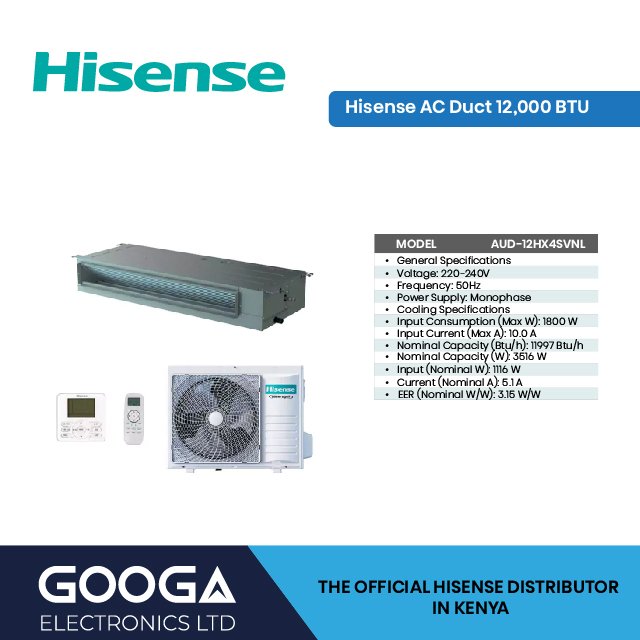
If a Hisense air conditioner runs but the room does not become comfortable, first confirm that the unit is actually in cooling mode and that air can move through the system. The issue may be a setting, a dirty user-accessible filter, blocked airflow, open doors or windows, an unsuitable room load or a fault requiring an HVAC technician. Split, cassette, ducted and floor-standing systems have different controls and maintenance procedures, so use the manual for the exact model.
1. Confirm the operating mode and setpoint
Check that the controller is set to Cool rather than Fan, Dry, Auto or a timer mode that may behave differently. Confirm the target temperature and fan setting, then allow the system to operate for the period recommended in the manual. Remote labels and menu options vary by model. Our Hisense AC remote modes guide explains the differences between common operating modes.
2. Check airflow at the indoor unit
Make sure curtains, furniture or stored items are not blocking the air outlet or return-air path. If the manual describes a user-removable filter, switch the unit off and clean it using the stated method. Allow it to dry completely before reinstalling. Do not reach into the fan, remove electrical covers or spray chemicals into the unit. See our filter-cleaning guide.
3. Reduce avoidable room heat load
Close doors and windows, reduce direct sunlight with curtains or blinds and avoid placing heat-producing appliances directly under the thermostat or indoor sensor. A room with high ceilings, large windows, many occupants or significant equipment may need more cooling capacity than a smaller room. Compare the room’s heat load and the installed system size rather than assuming that every 12,000 or 18,000 BTU unit is suitable for every room. Our BTU sizing guide covers the planning questions.
4. Check the outdoor unit from a safe distance
For a split system, look from outside to see whether the outdoor unit’s airflow area is blocked by stored items, vegetation or a wall too close to the equipment. Do not remove guards, touch fan blades or inspect electrical terminals. The installation must maintain the clearance specified by the manufacturer. Our outdoor-unit placement guide explains why ventilation and service access matter.
5. Note leaks, ice, noise or unusual behaviour
Water dripping indoors, ice on pipes or coils, repeated breaker trips, burning smells or abnormal mechanical noise are reasons to stop and arrange service. Do not chip ice, open the refrigerant circuit, top up gas or attempt electrical repairs. A refrigerant leak or pressure problem must be diagnosed by a qualified HVAC professional, not guessed from how cold the air feels.
6. When the system may be undersized or needs service
If airflow is clear and the settings are correct but the room remains warm, the system may be undersized, incorrectly installed or experiencing a fault. Ask a technician to check the installation, airflow, drainage, controls and refrigeration circuit. When comparing a replacement or additional unit, consider room dimensions, sun exposure, ceiling height, occupancy and the type of system required. For installation planning, see our AC installation quote guide.
For a product reference, see the Hisense AUD-24HX4SFLH1 24,000 BTU duct air conditioner. Confirm the exact system type, installation requirements, current availability and local warranty before ordering.
Frequently asked questions
Why does my Hisense AC blow air but not cool?
It may be in Fan or Dry mode, have restricted airflow, face a high room heat load or have a fault. Check the mode and manual before assuming a refrigerant problem.
Can a dirty filter reduce cooling?
A restricted filter can reduce airflow. Clean only the user-accessible filter as described in the model manual.
Should I add refrigerant gas when cooling is weak?
No. Refrigerant work requires a qualified HVAC technician to diagnose the system and follow the correct service procedure.
Can an undersized AC run without cooling the room properly?
Yes. Room heat load, sun exposure, ceiling height and occupancy all affect the required capacity.
Is water dripping indoors normal?
Persistent indoor dripping should be checked. Stop if there is water near electrical equipment and arrange service if safe external checks do not resolve it.
When should I switch the AC off?
Stop for burning smells, electrical trips, ice build-up, unusual mechanical noise or water near electrical parts. Arrange qualified service.
Related Hisense guides
Explore the Hisense Knowledge Centre for AC sizing, installation, maintenance and cooling-system comparisons.
