
Hisense Dishwasher Filter and Spray-Arm Cleaning in Kenya: Safe Maintenance Guide

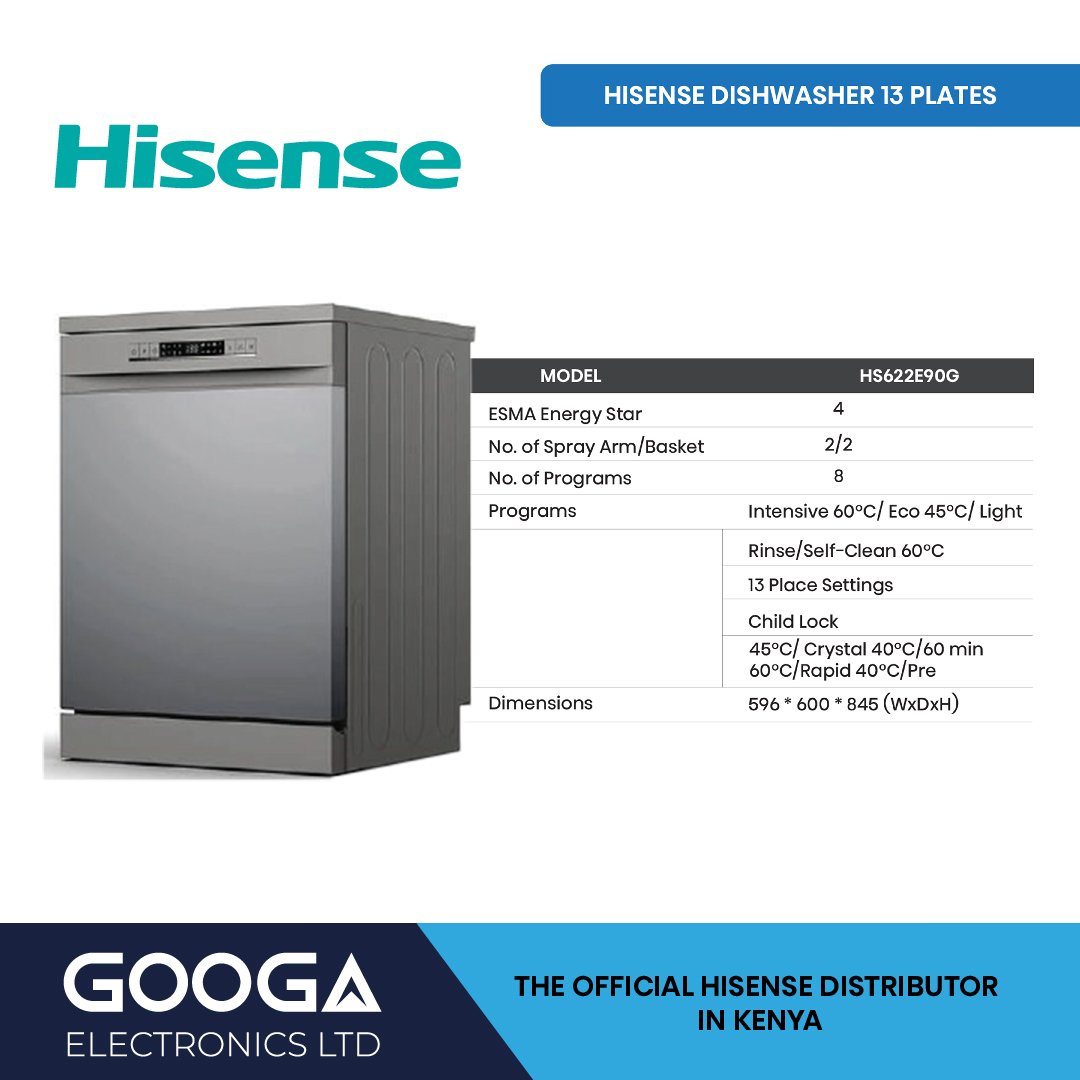
Regular cleaning helps a dishwasher drain properly and distribute water across the load. Food particles, labels, grease and detergent residue can collect around the filter, spray arms, door seal and dispenser. This guide covers safe owner-level maintenance for Hisense dishwashers, including the HS622E90G and HS623E90X listed by Infinite Tech. The exact filter design, removable parts and cleaning instructions must always be checked in the manual supplied with your model.
1. Make the appliance safe before cleaning
Allow the wash programme to finish and let hot dishes, water and internal surfaces cool. Switch the dishwasher off. If you need to inspect a hose or move the appliance, isolate power and water first and do not pull a built-in unit out by its door. Keep hands away from sharp utensils and broken glass in the filter area. If water has reached an electrical connection, stop using the appliance and arrange qualified service.
2. Inspect and clean the filter as the manual directs
Remove the lower rack only if the manual permits it. Locate the filter assembly at the bottom of the tub and follow the model-specific instructions for unlocking and lifting it. Do not force a filter that will not turn or lift; some assemblies use different locking arrangements.
Remove loose food debris into a bin, then rinse the removable filter parts with warm water. A soft brush can help lift grease and residue. Avoid wire brushes, sharp knives, abrasive pads or force that could damage a fine mesh. Refit every part in the correct orientation and make sure it locks securely before running another cycle. A filter left loose or incorrectly seated can affect cleaning and drainage.
3. Check the spray arms without damaging the jets
Look for food particles, seeds or mineral deposits in the spray-arm openings. Remove an arm only if the owner’s manual describes how to do so. Rinse it and use a soft brush to clear visible debris. Do not enlarge the holes with a drill bit, knife or hard metal pin. Reinstall the arm as instructed and confirm it can rotate freely without striking a rack or tall dish.
4. Wipe the door seal and detergent area
Use a soft damp cloth to wipe the door gasket and the surfaces around the detergent dispenser. Pay attention to corners where food residue may collect. Use a mild cleaner approved for the appliance surface, then wipe away residue. Do not pour household drain cleaner into the dishwasher and do not mix cleaning chemicals. Avoid chlorine bleach, abrasive powders or solvents unless the exact Hisense manual explicitly permits the product for that component.
5. Use detergent, salt and rinse aid correctly
Use dishwasher detergent intended for automatic dishwashers, not hand-washing liquid. Excess foam can cause poor results or leakage. Rinse aid and dishwasher salt are model- and water-softener-dependent: use them only in the correct reservoirs and follow the manual’s refill instructions. Never pour salt into the detergent dispenser. For water-hardness and dosing considerations, see our Hisense dishwasher detergent, rinse-aid and water-hardness guide.
6. Check the drain and inlet area safely
Look for visible kinks in accessible hoses and signs of water around the tap, connections and floor. Do not dismantle the pump, electrical parts or internal plumbing. If the dishwasher repeatedly leaves standing water, trips a breaker, smells of burning or leaks from underneath, stop the cycle and arrange service rather than continuing to run it.
Hisense dishwasher models listed by Infinite Tech
- Hisense HS622E90G 13-place dishwasher — check the live listing for the current product details and availability.
- Hisense HS623E90X 15-place dishwasher — confirm the exact model suffix and finish before ordering.
For loading and rack arrangement, read the Hisense dishwasher loading guide. If you are planning a new installation, use the dishwasher installation checklist as a separate reference.
A practical maintenance routine
- After loading: remove large food scraps and check that utensils are not blocking the spray arms.
- When needed: inspect the filter if water remains dirty, drainage slows or debris is visible.
- Periodically: wipe the door seal and dispenser area, and inspect spray-arm openings.
- When performance changes: check detergent dosing, water supply and loading before assuming a component has failed.
These are general owner-care prompts, not a replacement for a model-specific service schedule. The supplied manual takes precedence.
Frequently asked questions
How often should I clean a Hisense dishwasher filter?
Check it regularly and clean it when debris is visible or performance indicates a need. Follow the interval and removal procedure in the exact model manual.
Can I use a metal pin to clear spray-arm holes?
Avoid sharp metal tools that can enlarge or damage the jets. Use a soft brush and the manual’s recommended method.
Can I use ordinary hand-washing liquid?
No. Use detergent designed for an automatic dishwasher. Hand-washing liquid can create excessive foam.
Do all Hisense dishwashers need dishwasher salt?
Not necessarily. Salt use depends on the model’s water-softener system and local water hardness. Check the manual and the appliance’s salt reservoir.
Can I clean the dishwasher with bleach?
Do not use bleach or mix cleaning chemicals unless the model manual explicitly allows the product and method.
Why is water remaining at the bottom?
A blocked filter, obstructed drain path or installation issue may contribute. Check only accessible owner-service areas described in the manual; arrange service if water remains or the pump appears faulty.
What should I do if the dishwasher leaks?
Stop the cycle, isolate power and water if safe, and do not touch wet electrical connections. Have a qualified technician inspect persistent or internal leaks.
Where can I buy a Hisense dishwasher in Kenya?
Check the HS622E90G and HS623E90X product listings above for current stock and ordering information from Infinite Tech.
Important: Cleaning procedures vary by model and production revision. Never force a component or remove electrical, pump or plumbing assemblies as part of routine owner maintenance.
