

WHOOP Sleep, Strain & Recovery Scores Explained

WHOOP Kenya buying and learning guide · 31 October 2026. WHOOP is most valuable when its three headline ideas—sleep, strain and recovery—help you change behaviour, not when they become numbers to chase. Understanding how the app estimates each score helps Kenyan runners, gym members and people with busy workdays use it responsibly.
Sleep: look at both quantity and consistency
WHOOP monitors sleep duration and other overnight patterns to provide sleep insights and guidance. The actionable question is whether you’re regularly giving yourself enough sleep and keeping a routine that supports your goals. One isolated poor night’s score should not outweigh how you feel or a sustained trend.
For commuters and shift workers, bedtime regularity can be difficult. Review your weekly pattern and adjust a controllable habit first, such as going to bed earlier or reducing late caffeine, rather than treating a target score as a medical prescription.
Strain: a way to describe exertion
WHOOP’s Strain score summarises accumulated physiological load. A hard running session, sport, gym training or even a demanding daily routine can affect the score. The tracker uses heart-rate-related signals and its own algorithms rather than simply counting steps. Two people doing the same workout may record different Strain scores because responses and conditioning differ.
Use the metric to compare your own typical workloads, not to claim a friend trained ‘less’ because their number is lower.
Recovery: a readiness indicator, not a diagnosis
Recovery combines physiological signals such as heart-rate variability (HRV), resting heart rate and sleep-related measures to estimate readiness. Lower scores can suggest you may need to train differently or prioritise rest; they do not prove illness, injury or an underlying condition. Context matters: work stress, travel, alcohol, poor sleep or an unusual workout can affect trends.
One possible decision rule is to assess your recent trend, subjective fatigue and planned session together. Consider a lighter training day when several indicators suggest fatigue, but don’t treat one app reading as medical advice.
How to improve usefulness over four weeks
- Wear the sensor consistently and keep it comfortably snug.
- Check sleep timing and general recovery trends across multiple nights.
- Record comparable workouts and identify unusually strenuous days.
- Change one habit such as sleep schedule or recovery time.
- Review whether the longer-term pattern and your subjective wellbeing improve.
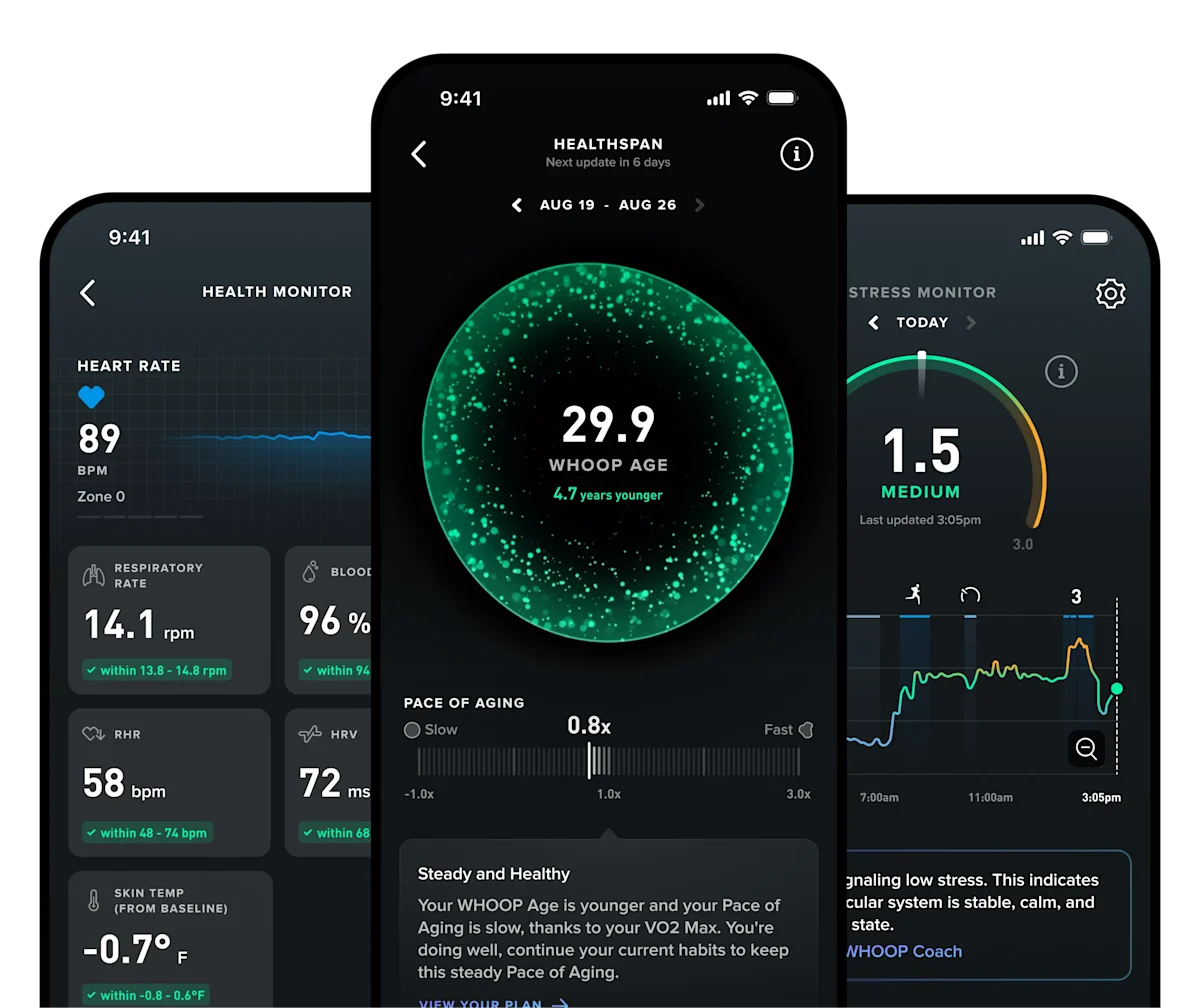
WHOOP Peak adds features such as Stress Monitor and Healthspan, but the foundations of wear consistency and sensible interpretation are similar across suitable memberships.
Common questions
Is a high Strain score always good?
No. Higher exertion is not automatically better if rest and recovery are inadequate.
Does a low Recovery score mean I am sick?
No. It is an estimated readiness signal, not a diagnostic test.
Can I compare my Recovery number directly with another athlete?
Scores are personalised and influenced by multiple factors; focus on your own trend.
Compare WHOOP locally
Shop the WHOOP Peak 5.0 Sensor and WHOOP Life MG Sensor at Infinite Tech Kenya. Call 0720450148 for stock, package contents, membership terms and Kenyan delivery. The WHOOP product category contains the current listings.
Continue reading: WHOOP membership tiers · Is WHOOP worth buying?
Manufacturer sources: WHOOP Basics · WHOOP Peak. Features and eligibility can change; check current official guidance.
