
HAVIT PB5212 vs PB37: 100W and 65W Power Banks Compared in Kenya

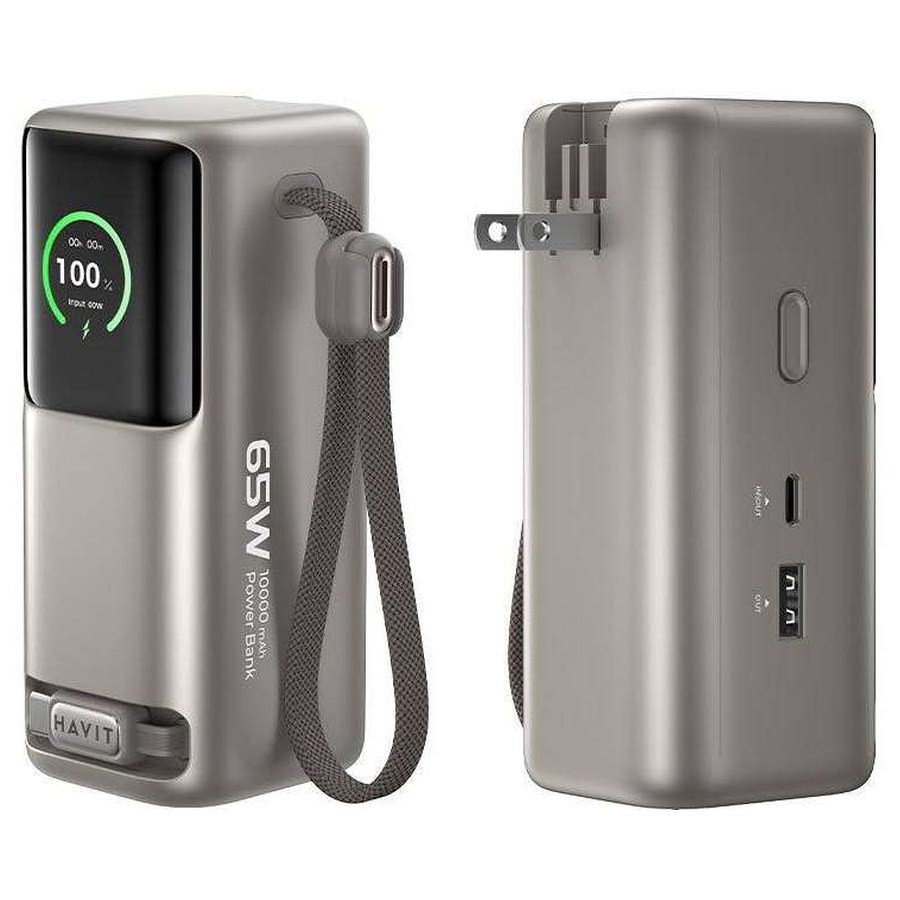
HAVIT PB5212 and HAVIT PB37 have different value propositions. PB5212 offers a supplier-listed USB-C output of up to 100W, while PB37 lists a built-in AC charging plug and USB-C cable along with up to 65W output. Choosing properly requires checking your device’s USB-C charging standard, your travel routine and the complete power profile.
Comparison at a glance
| Feature | PB5212 | PB37 |
|---|---|---|
| Infinite Tech retail price, 21 Nov 2026 | KSh 4,395 | KSh 7,495 |
| Maximum listed USB-C output | 100W | 65W |
| USB-C input | 65W maximum listed | USB-C and built-in AC input described |
| USB-A output | Up to 30W individually listed | Up to 30W individually listed |
| Built-in AC plug and USB-C cable | Not explicitly specified in available supplier entry | US/UK AC plug and USB-C cable listed |
| Battery capacity | Confirm with supplier; not unambiguously stated in available entry | 10,000mAh / 36Wh |
The PB5212 capacity is deliberately left unconfirmed because the source entry does not clearly state it. Comparisons of how many times each pack charges a phone would therefore be speculative.
PB5212: prioritizing output power
Higher supported single-port output can be useful for compatible USB-C laptops and tablets, but a “100W” label does not force 100W into the device. The charger and device negotiate the profile, and suitable USB-C cable current ratings are essential. Combined-port output may be below the sum of individual maximums. Before ordering, compare the laptop manufacturer’s required wattage and USB-C PD/PPS profile.
PB37: prioritizing convenience
PB37’s supplier listing describes an integrated AC plug, rechargeable USB-C port and built-in USB-C cable. This could reduce accessories when travelling or working between offices. A built-in plug can make use simpler, but must fit the socket safely and should be used only according to the specific device’s input rating. Do not assume every plug arrangement fits every Kenyan extension socket.
Energy and flight travel
The supplier lists PB37 as a 36Wh pack. A Wh figure measures stored energy more directly than mAh, which is tied to the battery’s cell voltage. Airlines often require power banks to be carried in cabin baggage and impose capacity limits. Check airline instructions and the exact device markings before travelling.
Phone charging versus laptop charging
For a smartphone drawing far less than 65W, neither power bank’s headline wattage alone determines charging speed. Compatible USB-C PD/PPS support, cable and thermal conditions matter. For a laptop, first verify whether it supports USB-C charging, since some laptops do not.
What would make me choose each model?
Choose PB5212 when the lower snapshot price and high rated output align with a supported device and you already own suitable charging accessories. Consider PB37 if an integrated charging setup and the documented 10,000mAh/36Wh capacity suit your travel needs. Ask Infinite Tech to confirm exact pack contents, colour, usable output and warranty.
FAQs
Does 100W mean PB5212 charges every laptop?
No. Device support and compatible USB-C profiles are necessary.
Is PB37 always the better travel model?
Not automatically. It depends on socket fit, luggage preferences and charging requirements.
Continue with our HAVIT power bank buying guide or the HAVIT Kenya product hub. Infinite Tech: Rehema House, Standard Street, first floor Shop 2, Nairobi CBD; call 0720 450 148.
